faculty lab
The Sodji Lab
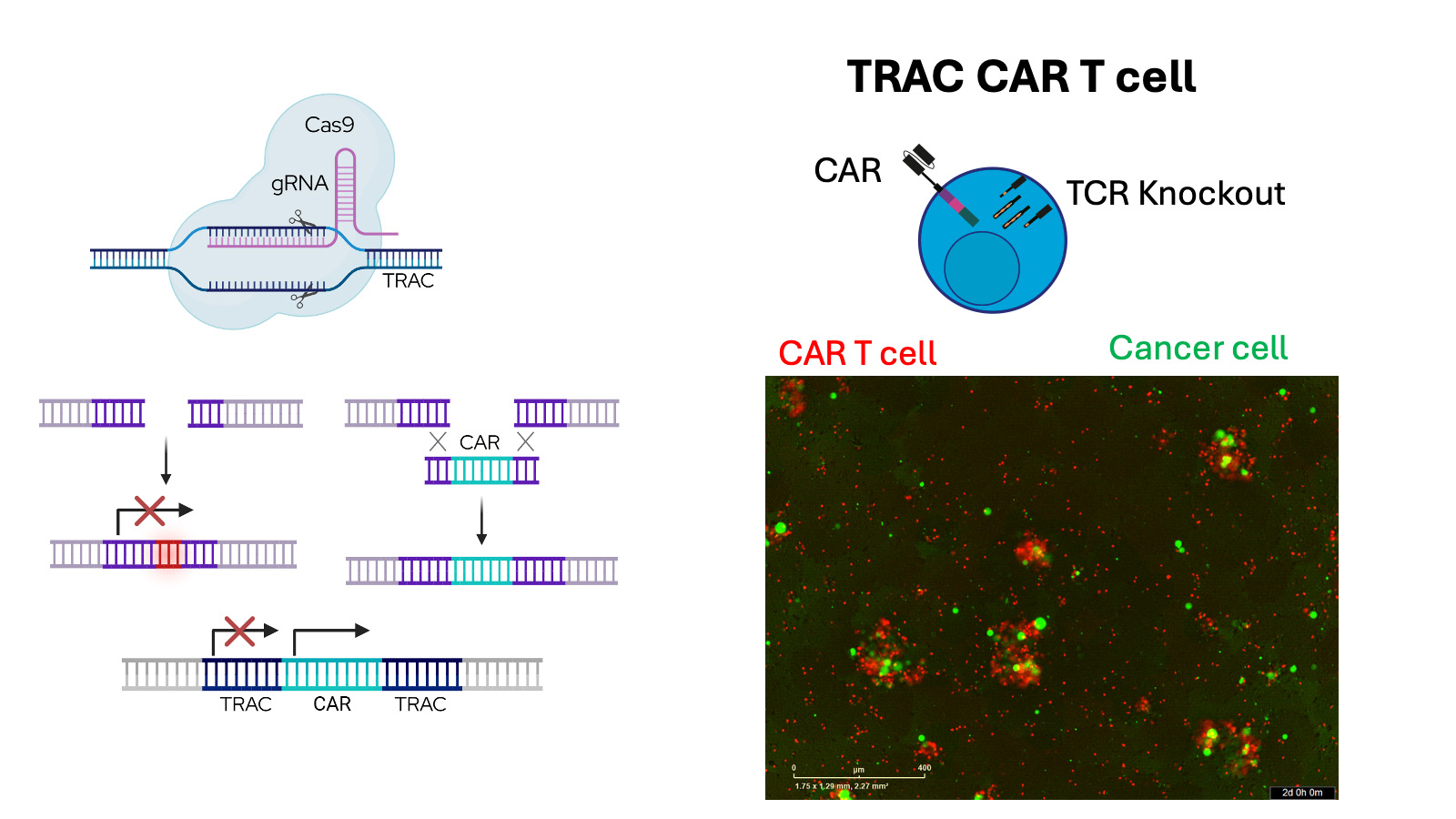
Radiopharmaceutical therapy (RPT) and chimeric antigen receptor (CAR) T cell therapy are transforming cancer treatment, but each faces key limitations, especially in solid tumors. The Sodji Lab studies how these approaches interact and works to uncover the mechanisms that drive (or limit) their synergy, with the goal of designing more effective combination therapies. We also engineer next-generation cell therapies using CRISPR/Cas9 to disrupt the T cell receptor, a strategy that could enable allogeneic (“off-the-shelf”) CAR T cell therapies.
Last updated:
Targeted radionuclide therapy (TRT) and chimeric antigen receptor (CAR) T cell therapy are emerging therapies that have revolutionized cancer therapy. However, each of these therapies is confronted by limitations that can potentially be resolved by the other. As such, understanding the mechanisms that govern the interactions between these novel therapies and ways to effectively harness their potential synergism will be crucial for advancing the field of oncology. Following the understanding of the mechanisms of these interactions, I propose the development of modulators including CAR T cell therapy, small molecules, and drug-antibody conjugates capable of effectively harnessing the collaborative effects between TRT and CAR T cells therapy.